
10 Point Review Of Systems Template: The Complete 2026 Guide To Automating ROS Documentation & Reducing Charting Time By 70%

What Is a Review of Systems (ROS) and Why Does It Matter?
The Review of Systems (ROS) is a systematic method healthcare providers use to identify symptoms patients may not have mentioned during the chief complaint discussion. This comprehensive inventory covers multiple body systems to uncover additional clinical information that could affect diagnosis and treatment planning.
A 10 point review of systems template streamlines this process by organizing questions across ten major body systems: constitutional, eyes, ears/nose/throat, cardiovascular, respiratory, gastrointestinal, genitourinary, musculoskeletal, integumentary (skin), and neurological/psychiatric. For overwhelmed practice managers facing staffing shortages, implementing standardized ROS templates directly addresses documentation burden while maintaining clinical quality.
According to a CDC Reports 15.4 Hours Weekly EHR Burden on Physicians, physicians spend 15.4 hours weekly on EHR documentation outside patient time, contributing to burnout rates exceeding 50%. This staggering statistic highlights why automating repetitive documentation tasks like ROS has become critical for practice sustainability.
Why Practice Managers Are Turning to Automated ROS Templates in 2026
The transition from manual to automated documentation represents more than a technological upgrade it's a strategic response to the healthcare workforce crisis. Practice managers juggling provider burnout, claim denial rates, and operational costs are discovering that a well-implemented 10 point review of systems template delivers measurable ROI across multiple dimensions.
Dramatic Reduction in Charting Time
Manual ROS documentation typically requires 3-7 minutes per patient encounter. When multiplied across 20-30 daily patients, this translates to 1-3.5 hours of documentation time daily per provider. Automated templates integrated with AI scribe technology can reduce this burden by 60-70%, reclaiming valuable clinical time.
Research from CDC NIOSH: Automation Cuts Staff Turnover 30% demonstrates that workflow automation reduced healthcare staff turnover by 30%, addressing shortages through efficiency in documentation tasks like ROS. This efficiency gain directly impacts your practice's bottom line while improving provider satisfaction.
Enhanced Billing Compliance and Reimbursement
Incomplete ROS documentation remains a leading cause of claim denials and downcoding. Medicare and commercial payers require specific levels of ROS documentation for E/M code justification. A standardized template ensures consistent capture of the 10+ systems needed for comprehensive examinations, protecting revenue while reducing audit risk.
The document automation capabilities of modern platforms ensure every required element is captured, timestamped, and compliant with current billing guidelines eliminating the guesswork that leads to revenue leakage.
Combating Provider Burnout Through Technology
The correlation between documentation burden and physician burnout is well-established. By implementing efficient ROS workflows, practice managers directly address the top pain point driving provider dissatisfaction. When clinicians spend less time clicking boxes and more time engaging patients, job satisfaction improves measurably.
Integrating solutions like medical scribe automation transforms the documentation experience from a post-encounter chore into a seamless part of patient interaction, reducing 'pajama time' spent charting after hours.
The Essential Components of an Effective 10 Point ROS Template
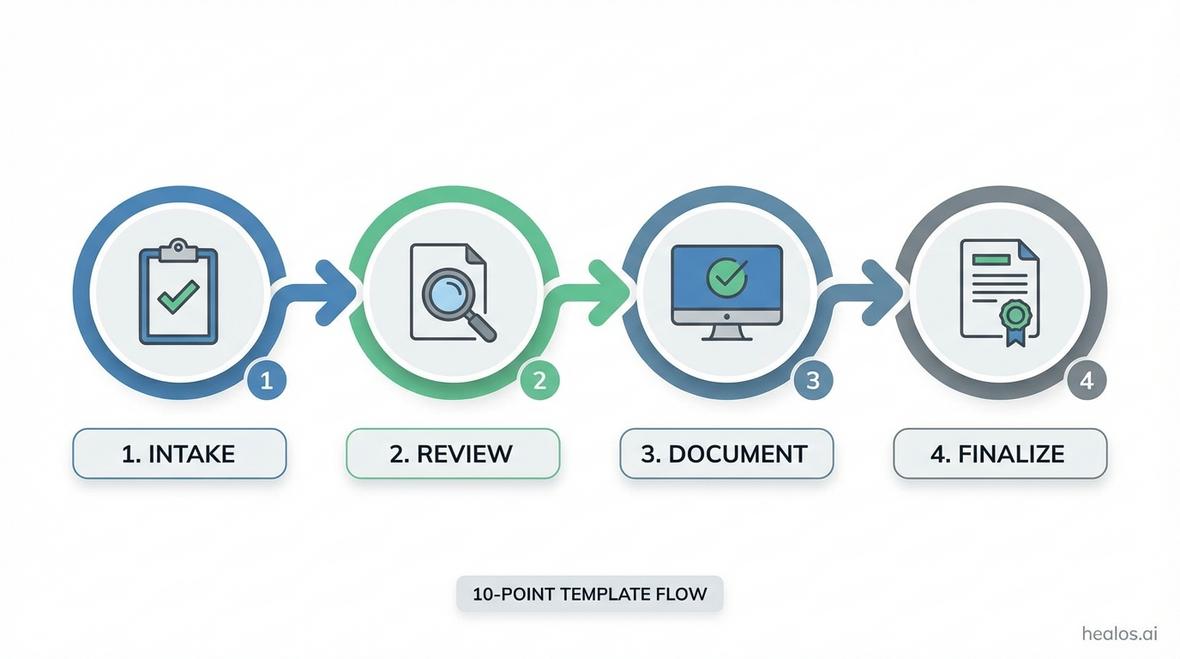
A well-designed 10 point review of systems template balances comprehensiveness with efficiency. Here's how to structure each system for maximum clinical utility and documentation speed:
1. Constitutional Symptoms
This foundational category captures general health indicators that often signal systemic conditions. Include checkboxes or dropdown options for: fever, chills, fatigue, weight changes (loss or gain with specific amounts and timeframes), night sweats, and general malaise. Smart templates should allow providers to quantify weight changes in pounds or kilograms over specific periods.
2. Eyes/Vision
Document visual acuity changes, eye pain, redness, discharge, excessive tearing, double vision (diplopia), floaters, halos around lights, and photophobia. For specialty practices, more granular options may include specific visual field defects or accommodation problems.
3. Ears, Nose, and Throat
This comprehensive system should capture: hearing loss or changes, tinnitus, ear pain or discharge, nasal congestion, rhinorrhea, epistaxis (nosebleeds), sinus pressure, sore throat, hoarseness, dysphagia (difficulty swallowing), and oral lesions. Template design should allow differentiation between acute and chronic presentations.
4. Cardiovascular
Critical for risk assessment, this section includes: chest pain or pressure (with radiation patterns), palpitations, irregular heartbeat, orthopnea, paroxysmal nocturnal dyspnea, peripheral edema (location and severity), claudication, and syncope or near-syncope episodes. Advanced templates integrate cardiac risk calculators.
5. Respiratory
Document shortness of breath (at rest versus exertion), cough (productive versus nonproductive with sputum characteristics), wheezing, hemoptysis, and chest tightness. Temporal patterns (seasonal, nocturnal, exercise-induced) provide diagnostic context that templates should capture systematically.
6. Gastrointestinal
This extensive system requires: appetite changes, nausea, vomiting (with characteristics), diarrhea, constipation, abdominal pain (location using quadrant descriptors), bloating, dyspepsia, hematemesis, melena, hematochezia, jaundice, and changes in bowel habits. Frequency quantification enhances clinical utility.
7. Genitourinary
Include urinary frequency, urgency, dysuria, hematuria, nocturia, incontinence, hesitancy, weak stream, and flank pain. For comprehensive care, gender-specific options should address menstrual irregularities, vaginal discharge, erectile dysfunction, testicular pain, and sexual dysfunction with appropriate sensitivity to patient privacy.
8. Musculoskeletal
Capture joint pain, swelling, or stiffness (with specific joint identification), muscle weakness or pain, back pain (cervical, thoracic, lumbar specification), limited range of motion, gait disturbances, and trauma history. Functional impact assessment (ADL limitations) adds clinical depth.
9. Integumentary (Skin)
Document rashes, lesions (with morphology descriptors), pruritus, color changes, nail changes, hair loss or changes, skin texture alterations, and healing abnormalities. Visual documentation integration enhances this system's clinical value.
10. Neurological and Psychiatric
This dual-purpose section addresses: headaches (pattern, severity, associated symptoms), dizziness or vertigo, numbness or tingling (distribution), weakness, tremors, seizures, memory changes, mood disturbances, anxiety, depression, sleep disturbances, and cognitive changes. Mental health screening integration creates opportunities for early intervention.
Implementation Best Practices for Your 10 Point ROS Template
Deploying an effective ROS template requires more than selecting the right software it demands thoughtful workflow integration and staff training.
Seamless EHR Integration
Your template must integrate bidirectionally with your existing EHR system. Solutions offering seamless EHR integration eliminate duplicate data entry and ensure ROS findings populate appropriate sections of the clinical note automatically. For practice managers concerned about technical complexity, platforms with 'unified agent' approaches simplify implementation across multiple systems.
Specialty-Specific Customization
While the 10 core systems provide comprehensive coverage, specialty practices benefit from customized emphasis. Cardiology practices may expand cardiovascular detail, while pediatric practices need age-appropriate developmental milestones integrated. Your template should flex to specialty requirements without sacrificing standardization.
Pre-Visit Patient Intake Automation
Progressive practices are shifting ROS data collection to the pre-visit phase using patient portals and automated intake solutions. Patients complete digital questionnaires on tablets or smartphones before appointments, allowing providers to review and verify rather than conduct entire interviews. This approach dramatically reduces face-to-face documentation time.
Staff Training and Change Management
Technology adoption fails without proper training. Designate 'super users' among clinical staff who master the template system and provide peer support. Schedule brief training sessions focusing on time-saving features like voice dictation, quick-pick phrases, and template shortcuts. Emphasize how efficiency gains benefit staff directly through reduced overtime and workload.
Overcoming Common ROS Template Implementation Challenges
Practice managers typically encounter predictable obstacles when transitioning to structured ROS documentation. Anticipating these challenges enables proactive solutions.
Provider Resistance to Structured Documentation
Physicians accustomed to free-text narrative notes may initially resist checkbox templates, perceiving them as limiting clinical expression. Address this by emphasizing customization options and demonstrating time savings. Hybrid approaches allowing free-text addendums to structured data often ease transitions.
Template Fatigue and Alert Overload
Poorly designed templates overwhelm users with excessive options, creating 'click fatigue.' Optimize your 10 point review of systems template by using intelligent defaults, conditional logic (questions appearing only when relevant), and streamlined interfaces. Regular user feedback sessions identify friction points requiring redesign.
Ensuring Data Quality and Clinical Relevance
Auto-population and copy-forward functionality risk propagating outdated or inaccurate information. Implement timestamp visibility, highlight outdated data, and require active confirmation of unchanged findings. Periodic audits of documented ROS versus clinical context maintain data integrity.
Measuring ROI: Metrics That Matter for Practice Managers
Justifying technology investments requires quantifiable outcomes. Track these key performance indicators when implementing automated ROS templates:
- Documentation Time Per Encounter: Measure before and after implementation. Target 40-60% reduction in ROS-specific documentation time.
- Claim Denial Rates: Monitor denials related to insufficient documentation. Comprehensive ROS typically reduces these by 20-35%.
- Provider Satisfaction Scores: Survey clinicians quarterly regarding documentation burden. Improvement correlates with retention.
- After-Hours EHR Use: Track login patterns. Effective templates should reduce evening and weekend charting by 30-50%.
- Revenue Capture: Analyze E/M code distribution. Complete ROS supports higher-complexity coding, often increasing per-encounter revenue by 8-12%.
The Future of ROS Documentation: AI and Voice Integration
The next evolution in ROS template technology leverages artificial intelligence and ambient voice capture. Rather than manually selecting symptoms from lists, providers conduct natural conversations while AI extracts and codes ROS elements automatically.
Platforms incorporating medical dictation and ambient listening technology transform documentation from active data entry to passive capture. Clinicians speak naturally with patients while systems generate structured ROS documentation in real-time, eliminating the traditional tension between patient engagement and thorough documentation.
This ambient approach represents the ultimate solution for practice managers seeking to scale operations without proportionally increasing administrative staff a core challenge for the overwhelmed practice manager persona. The technology handles documentation burden automatically, allowing existing teams to serve more patients without sacrificing quality or increasing burnout risk.
Choosing the Right ROS Template Solution for Your Practice
Selection criteria should align with your practice's specific operational challenges and technology ecosystem. Consider these factors:
Integration Compatibility
Verify compatibility with your current EHR. Solutions offering universal integration capabilities or API-based connections minimize implementation complexity. Ask vendors about specific integration experiences with your EHR platform.
Customization Flexibility
Your template should accommodate specialty-specific workflows without requiring extensive IT support. User-friendly customization tools empower clinical leadership to refine templates based on evolving needs.
Scalability and Multi-Location Support
For practices with multiple locations or planning expansion, ensure the solution scales efficiently. Cloud-based platforms typically offer superior scalability compared to on-premises systems.
Vendor Support and Training
Implementation success depends heavily on vendor support quality. Evaluate training resources, ongoing support availability, and user community strength. Platforms with dedicated support infrastructure reduce internal burden on practice managers.
Cost Structure and ROI Timeline
Analyze total cost of ownership including licensing, implementation, training, and maintenance. Calculate expected ROI based on documentation time savings, reduced denials, and potential revenue enhancement. Most practices achieve positive ROI within 6-12 months when properly implemented.
Frequently Asked Questions About 10 Point ROS Templates
Is a 10 point ROS required for all E/M levels?
No. The extent of ROS documentation required depends on the E/M service level. Problem-focused visits may require only one system, while comprehensive examinations typically require 10 or more systems reviewed and documented. Your template should accommodate all levels efficiently.
Can patients complete the ROS template themselves?
Yes. Many practices successfully use patient-facing ROS questionnaires completed via tablets or patient portals before appointments. Providers then review, verify, and supplement patient-entered data, significantly reducing face-to-face documentation time.
How often should ROS templates be updated?
Review templates at least annually to ensure alignment with current billing requirements, clinical guidelines, and user feedback. More frequent adjustments may be needed following regulatory changes or significant workflow modifications.
What's the best way to document negative findings efficiently?
'All other systems reviewed and negative' statements are acceptable when accompanied by documentation of the specific systems actually reviewed. Templates should make it easy to mark multiple systems negative with single actions while maintaining specificity.
How accurate is AI-powered ROS documentation?
Modern AI medical scribes achieve 95-98% accuracy in capturing and coding ROS elements from natural conversation when properly trained on medical terminology and specialty-specific language. Providers should always review AI-generated documentation before finalizing, but editing time is substantially less than original documentation.
Conclusion
Implementing an effective 10 point review of systems template represents a strategic investment that directly addresses the core challenges facing overwhelmed practice managers in 2026. By reducing the 15.4 hours weekly that physicians spend on EHR documentation outside patient time and cutting staff turnover by up to 30% through workflow automation, standardized ROS templates deliver measurable operational and financial benefits. The key lies in selecting solutions offering seamless EHR integration, specialty customization, and preferably AI-powered automation that transforms documentation from burden to background process. When thoughtfully implemented with proper training and ongoing optimization, these templates enable practices to scale efficiently without proportional headcount increases turning documentation efficiency into competitive advantage in an increasingly challenging healthcare landscape.