
AI Charting Software: The Complete 2026 Guide To Automated Clinical Documentation

Understanding AI Charting Software
AI charting software represents a transformative leap in healthcare documentation, leveraging artificial intelligence to automate the creation, management, and optimization of clinical notes. As healthcare providers face mounting administrative burdens, ai charting software has emerged as a critical solution to reduce documentation time, minimize burnout, and improve patient care quality.
Unlike traditional electronic health record (EHR) systems that require manual data entry, AI charting tools use natural language processing (NLP), machine learning, and ambient listening technology to capture patient encounters in real-time. These platforms can generate comprehensive SOAP notes, progress notes, and other clinical documentation formats with minimal provider intervention.
According to research from Data Insights Market, the AI Software market is projected to reach $294.71 billion by 2025 at 32.1% CAGR, fueled by demand for automation in text processing relevant to charting and documentation efficiency. This explosive growth reflects the healthcare industry's urgent need for solutions that address the documentation crisis.
The core advantage of ai charting software lies in its ability to transform verbal conversations between clinicians and patients into structured, accurate clinical notes. This technology eliminates the need for providers to spend hours after clinic completing charts, a phenomenon known as 'pajama time' that affects physician satisfaction and work-life balance.
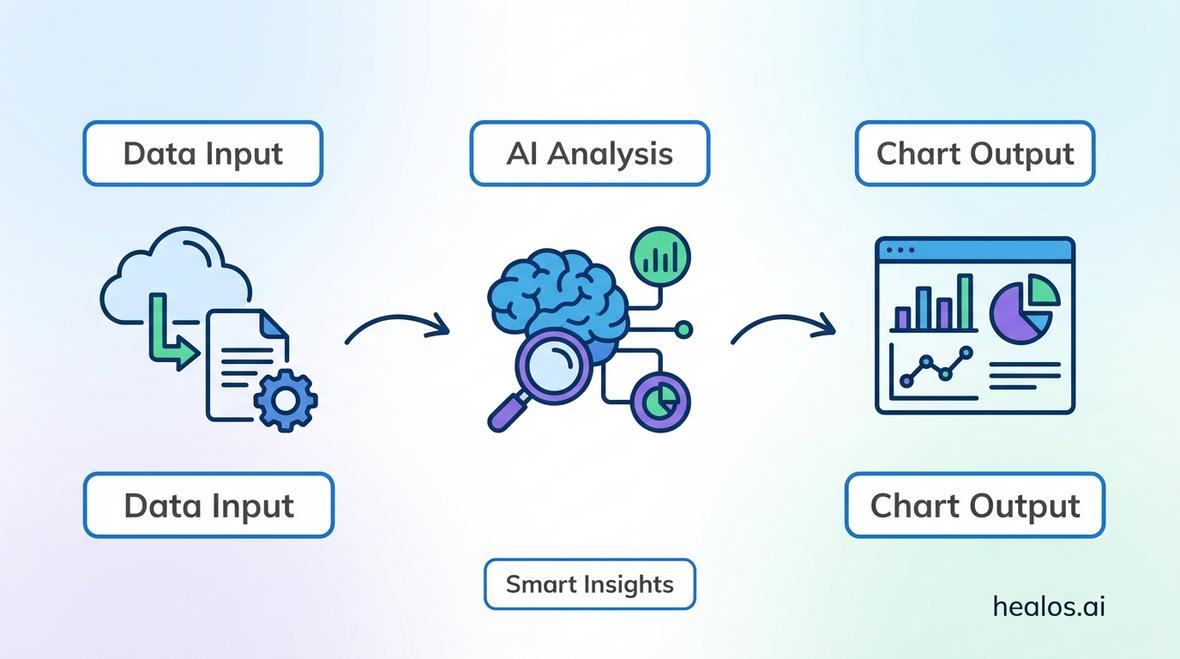
Key Features of Modern AI Charting Platforms
Modern ai charting software platforms offer a comprehensive suite of features designed to streamline clinical workflows and enhance documentation accuracy. Understanding these capabilities helps healthcare organizations select the right solution for their specific needs.
Ambient Listening and Voice Recognition
Ambient listening technology represents the pinnacle of ai charting software innovation. These systems passively capture patient-provider conversations without requiring clinicians to dictate into a device or wear special equipment. Advanced voice recognition algorithms differentiate between multiple speakers, identify medical terminology, and filter out background noise to produce accurate transcriptions.
The technology works seamlessly during telemedicine visits and in-person consultations, making it versatile across care settings. Providers can focus entirely on patient interaction while the AI system handles documentation in the background.
Intelligent Note Generation
AI charting platforms automatically structure captured conversations into standardized clinical note formats. Whether your practice uses SOAP, DAP, BIRP, or custom templates, the software adapts to your documentation preferences. The system extracts relevant clinical information, organizes it logically, and populates appropriate sections including chief complaint, history of present illness, review of systems, physical examination findings, assessment, and treatment plan.
Advanced platforms like HealOS AI Scribe offer customizable templates that align with specialty-specific requirements, ensuring documentation meets regulatory standards while reflecting your unique clinical approach.
EHR Integration Capabilities
Seamless integration with existing electronic health record systems is critical for ai charting software adoption. Leading platforms offer bidirectional data flow with major EHR systems including Epic, Cerner, Athenahealth, and others. This integration eliminates the need for manual data transfer and ensures patient information remains synchronized across all systems.
Integration capabilities extend beyond basic note insertion. Advanced systems can pull patient demographics, medical history, and medication lists from the EHR to pre-populate notes, while simultaneously updating the EHR with new encounter data, orders, and billing codes.
Medical Coding and Billing Support
Many ai charting software solutions now include automated medical coding features that suggest appropriate CPT, ICD-10, and HCPCS codes based on documented services. This functionality helps maximize reimbursement while ensuring compliance with payer requirements.
The AI analyzes note content to identify billable procedures, complexity levels, and supporting documentation for higher-level codes. This reduces revenue leakage from undercoding and minimizes audit risk from overcoding, directly impacting practice profitability.
Benefits of Implementing AI Charting Software
The adoption of ai charting software delivers measurable improvements across multiple dimensions of healthcare delivery. These benefits extend to providers, staff, patients, and the overall financial health of medical practices.
Dramatic Time Savings
Documentation time represents one of the largest administrative burdens in healthcare. Traditional charting methods consume 2-3 hours of provider time per clinic day, with many physicians spending additional hours completing notes after hours. AI charting software can reduce documentation time by 75% or more, reclaiming valuable hours that can be redirected to patient care or personal time.
Studies show that providers using AI documentation tools complete notes in real-time or within minutes of the encounter, virtually eliminating after-hours charting. This transformation allows practices to see more patients without extending work hours or adding staff.
Enhanced Clinical Accuracy
Human documentation is prone to errors, omissions, and inconsistencies that can compromise patient safety and expose practices to liability. AI charting software maintains consistent documentation standards, captures complete information from each encounter, and reduces transcription errors that occur with manual entry.
The technology's ability to record verbatim conversations ensures no clinical detail is lost, while intelligent algorithms identify potential documentation gaps or inconsistencies that require clarification. This thoroughness improves care coordination and supports better clinical decision-making.
Reduced Provider Burnout
Administrative burden is a leading contributor to physician burnout, with documentation requirements cited as a primary source of frustration. By automating the most time-consuming aspect of clinical practice, ai charting software significantly improves provider satisfaction and retention.
Healthcare organizations implementing AI documentation tools report measurable improvements in provider wellness scores, reduced turnover, and enhanced work-life balance. The research on AI medical scribes demonstrates clear connections between documentation automation and burnout reduction.
Improved Patient Engagement
When providers are freed from constant computer interaction during visits, they can maintain better eye contact and build stronger therapeutic relationships. Patients consistently report higher satisfaction when clinicians are fully present during encounters rather than focused on typing.
AI charting software enables this patient-centered approach by handling documentation invisibly in the background. Providers can engage naturally in conversation, perform examinations, and demonstrate empathy without documentation concerns interrupting the flow of care.
Implementation Considerations
Successfully deploying ai charting software requires careful planning and attention to several critical factors. Organizations that address these considerations proactively achieve faster adoption and better outcomes.
Security and Compliance
Healthcare data security is paramount when implementing any technology that handles protected health information. AI charting software must meet stringent HIPAA requirements, including encryption in transit and at rest, access controls, audit logging, and business associate agreements.
Verify that potential vendors maintain relevant certifications such as SOC 2 Type II, HITRUST, and ISO 27001. Understanding how the platform handles data, where it's stored, and what third-party services may access it is essential for compliance and risk management.
Training and Adoption
Even the most sophisticated ai charting software delivers value only when clinicians use it consistently. Developing a comprehensive training program that addresses technical skills, workflow integration, and change management is crucial for successful adoption.
Leading implementations include hands-on training sessions, readily available support resources, designated super-users who champion the technology, and ongoing feedback mechanisms to identify and address adoption barriers. The implementation guide for medical scribe adoption offers proven strategies for overcoming resistance and building user confidence.
Cost and ROI Analysis
Understanding the total cost of ownership and expected return on investment is essential for justifying ai charting software investments. Costs typically include subscription fees per provider, implementation services, training, and ongoing support.
However, the ROI calculation should account for time savings valued at provider hourly rates, potential revenue increases from seeing additional patients, reduced transcription costs, improved coding accuracy, and retention savings from reduced burnout. Most practices achieve positive ROI within 6-12 months of implementation. According to recent AI research, Cursor AI achieved $1 billion ARR with 36% conversion rate and 50,000+ enterprise seats, showing strong user retention and ROI potential for AI tools reducing administrative burdens.
Specialty-Specific Applications
Different medical specialties have unique documentation requirements and workflows. The best ai charting software platforms offer specialty-specific configurations that address these distinct needs.
Primary Care and Family Medicine
Primary care providers see diverse patient populations with varied chief complaints, requiring flexible documentation that captures comprehensive health assessments. AI charting software for primary care must handle preventive care visits, acute illness evaluations, chronic disease management, and coordination of care across multiple conditions.
Solutions tailored for individual providers in family practice settings offer templates for well visits, sick visits, annual physicals, and other common encounter types while maintaining the flexibility to document unusual presentations.
Mental Health and Psychiatry
Mental health professionals require specialized ai charting software that captures therapeutic conversations while maintaining appropriate confidentiality and following specialty documentation standards. These providers need tools that generate progress notes, treatment plans, mental status examinations, and risk assessments specific to behavioral health.
Platforms designed for psychiatry practices include templates for psychotherapy sessions, medication management visits, and comprehensive psychiatric evaluations that align with specialty billing requirements.
Cardiology and Specialty Medicine
Subspecialty practices like cardiology require ai charting software that handles complex diagnostic testing, procedure documentation, and specialty-specific terminology. These providers need systems that integrate with diagnostic equipment, capture procedure notes, and document technical findings with precision.
Advanced platforms offer customizable templates for stress tests, echocardiograms, catheterization procedures, and other specialty-specific encounters while maintaining compatibility with subspecialty EHR modules.
Pediatrics
Pediatric practices face unique documentation challenges including growth tracking, developmental assessments, immunization records, and age-specific preventive care guidelines. AI charting software for pediatrics must accommodate these requirements while capturing family dynamics and caregiver concerns.
Specialized platforms include built-in growth charts, developmental milestone checklists, and age-appropriate templates that streamline well-child visits and sick visits for patients from infancy through adolescence.
Comparing Top AI Charting Software Platforms
The ai charting software market has expanded rapidly, with numerous vendors offering varying capabilities, pricing models, and specialty focus. Understanding the key differentiators helps practices select the optimal solution.
Evaluation Criteria
When comparing platforms, consider accuracy rates for transcription and note generation, integration capabilities with your specific EHR system, customization options for templates and workflows, user interface design and ease of use, customer support quality and availability, pricing transparency and total cost, and vendor stability and long-term viability.
Request demonstrations from multiple vendors, involve end-users in the evaluation process, and conduct pilot testing before committing to organization-wide deployment. The step-by-step guide to choosing AI note-taking tools provides a comprehensive evaluation framework.
Market Leaders and Emerging Solutions
The competitive landscape includes established players with mature platforms and innovative startups introducing novel approaches. Leading solutions emphasize accuracy, ease of use, and comprehensive feature sets that address the full spectrum of documentation needs.
HealOS (formerly ScribeHealth AI) has emerged as a comprehensive platform offering AI medical scribe capabilities alongside AI receptionist functions, document automation, and revenue cycle management tools. This integrated approach addresses multiple practice pain points through a unified platform.
Other notable platforms include specialized solutions for mental health, emergency medicine, and other niches. Detailed comparisons are available through resources like the HealOS comparison tool that evaluates features, pricing, and specialty fit across competing solutions.
Future Trends in AI Charting
The evolution of ai charting software continues accelerating as artificial intelligence capabilities advance and healthcare organizations demand increasingly sophisticated automation. Several emerging trends will shape the next generation of clinical documentation tools.
Predictive Analytics and Clinical Decision Support
Future ai charting software will move beyond passive documentation to actively support clinical decision-making. By analyzing patterns across thousands of similar cases, AI systems will suggest diagnoses, recommend evidence-based treatment protocols, and identify patients at risk for adverse outcomes.
These capabilities will be embedded seamlessly in the documentation workflow, presenting relevant insights at the point of care without requiring separate queries or reports. According to ABI Research, Generative AI framework is growing at 34.5% CAGR, with largest opportunities in foundation models, optimization software, and deployment tools, supporting enhanced EHR integration for workflow efficiency.
Multilingual Support and Global Expansion
As healthcare delivery becomes increasingly multicultural, ai charting software must support documentation in multiple languages and handle real-time translation for patient encounters. Advanced platforms will transcribe conversations in the patient's native language while generating clinical notes in the provider's preferred language.
This capability removes language barriers to quality care while ensuring documentation meets regulatory requirements regardless of the conversation's original language.
Mobile and Point-of-Care Solutions
The shift toward mobile health delivery requires ai charting software that functions seamlessly on smartphones and tablets. Home visit providers, mobile clinics, and telehealth practitioners need lightweight applications that deliver full functionality without requiring desktop computers.
Next-generation platforms will offer native mobile apps with offline capabilities that sync automatically when connectivity is restored, ensuring documentation is never delayed by technical limitations.
Frequently Asked Questions
How accurate is AI charting software?
Modern ai charting software platforms achieve transcription accuracy rates of 95-98% for medical terminology and clinical conversations. The best systems use specialized medical language models trained on millions of clinical encounters, enabling them to recognize complex medical terms, abbreviations, and context-specific meanings that general-purpose transcription services miss.
Will AI replace human medical scribes?
While ai charting software automates many functions traditionally performed by human scribes, it complements rather than completely replaces human expertise. Complex cases, nuanced clinical reasoning, and situations requiring judgment still benefit from human oversight. However, AI dramatically reduces the need for full-time scribe staff, allowing practices to redirect resources toward patient care.
What does AI charting software cost?
Pricing for ai charting software varies widely based on features, user volume, and implementation complexity. Subscription models typically range from $99 to $500 per provider per month. This represents significant savings compared to human scribes, which cost $30,000 to $50,000 annually per full-time equivalent. Most practices achieve positive ROI within the first year of implementation.
How long does implementation take?
Implementation timelines for ai charting software range from days to weeks depending on integration complexity. Simple cloud-based solutions with minimal EHR integration can be operational within 24-48 hours. More complex deployments involving deep EHR integration, custom template development, and comprehensive training may require 4-8 weeks. The deployment guide outlines strategies for accelerated implementation.
Is my data secure with AI charting software?
Reputable ai charting software vendors implement comprehensive security measures including end-to-end encryption, role-based access controls, audit logging, and regular security assessments. Look for platforms that maintain HIPAA compliance, SOC 2 Type II certification, and business associate agreements. Always review vendor security documentation and conduct due diligence before implementation.
Conclusion
AI charting software represents a fundamental transformation in clinical documentation, offering healthcare providers powerful tools to reclaim time, reduce burnout, and improve care quality. As the technology continues advancing, with the AI software market projected to reach $294.71 billion by 2025, adoption will accelerate across all practice sizes and specialties. Organizations that embrace these solutions now position themselves to deliver superior patient experiences while maintaining provider satisfaction and financial sustainability. By carefully evaluating options, planning thoughtful implementations, and selecting platforms aligned with specific practice needs, healthcare providers can leverage ai charting software to thrive in an increasingly complex healthcare landscape.