
AI Medical Assistant: Complete Guide To Automating Practice Workflows And Reducing Provider Burnout

Understanding AI Medical Assistants in Modern Healthcare
The healthcare industry is experiencing a transformative shift with the introduction of AI medical assistant technology. These intelligent systems are designed to automate administrative workflows, reduce documentation burdens, and address the critical staffing shortages that plague medical practices today. For overwhelmed practice managers, implementing an AI medical assistant represents a strategic solution to scale operations without increasing headcount while simultaneously improving financial health through reduced claim denials and enhanced operational efficiency.
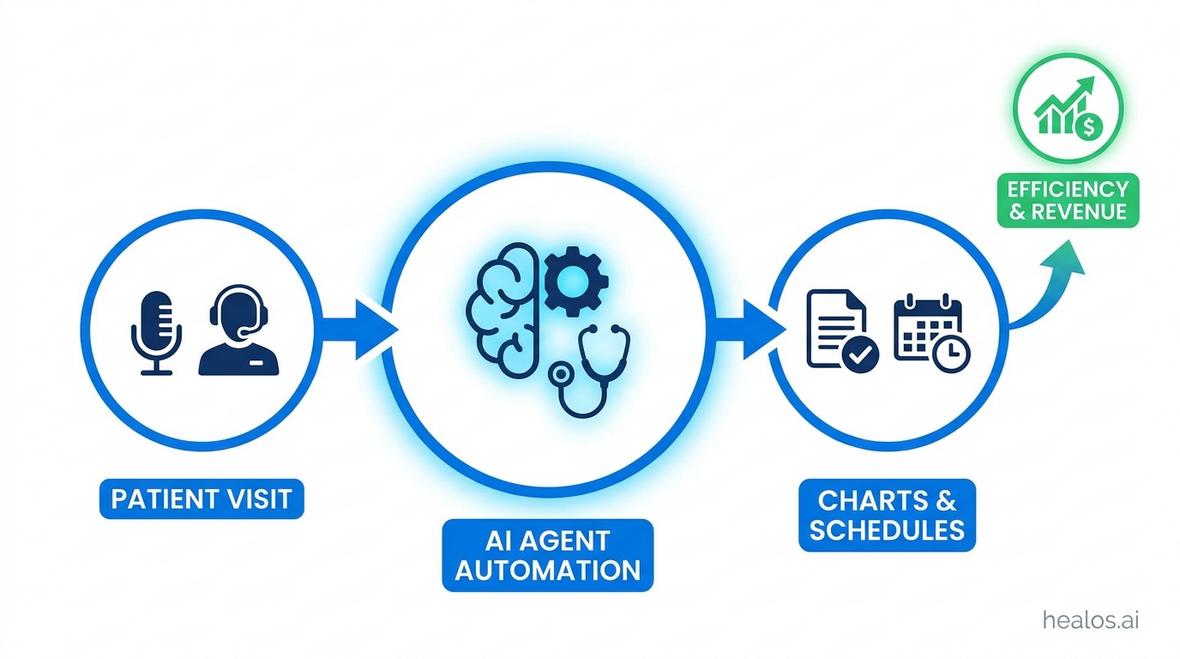
An ai medical assistant leverages machine learning, natural language processing, and automation to handle tasks that traditionally consumed countless hours of staff time. From clinical documentation and patient intake to insurance verification and billing management, these systems operate as unified agents that integrate seamlessly with existing EHR platforms. According to Stanford Medicine research, there are now over 1,200 FDA-cleared AI-enabled medical tools and hundreds of thousands of consumer health applications using machine learning, demonstrating the rapid adoption and regulatory acceptance of these technologies.
The market for AI medical assistants has expanded significantly, with comprehensive analyses showing Big Tech health AI assistants now offering HIPAA-compliant solutions specifically designed for practice managers evaluating AI integration. These systems address the core pain points of modern healthcare: provider burnout from excessive charting, staffing shortages, and the financial impact of claim denials.
Core Capabilities of AI Medical Assistants
Clinical Documentation Automation
One of the most impactful capabilities of an ai medical assistant is its ability to automate clinical documentation. Traditional charting can consume 77% of administrative tasks, according to research on healthcare workflows. AI-powered medical scribes capture patient encounters in real-time, generating comprehensive SOAP notes, progress notes, and visit summaries without requiring physicians to type or dictate manually.
These systems utilize ambient listening technology that records patient-provider conversations and automatically extracts relevant clinical information. The AI then structures this data into properly formatted clinical notes that integrate directly into the EHR system. This reduces charting time by up to 75%, allowing providers to see more patients while spending less time on administrative work. The AI scribe functionality from HealOS exemplifies this unified approach, offering seamless integration with major EHR platforms.
Administrative Workflow Automation
Beyond clinical documentation, AI medical assistants excel at automating repetitive administrative tasks. U.S. Bureau of Labor Statistics projections show 12% employment growth for medical assistants through 2034, with 101,200 new jobs expected. However, AI can handle many routine tasks without requiring additional staff, including:
- Automated Scheduling: Intelligent appointment booking that optimizes provider calendars and reduces no-shows through automated reminders
- Lab Result Flagging: AI systems that automatically identify abnormal results and alert appropriate staff members
- Readmission Risk Prediction: Machine learning algorithms that identify patients at high risk for readmission, enabling proactive intervention
- Patient Communication:AI-powered chatbots and virtual receptionists that handle routine patient inquiries 24/7
The quantifiable impact on patient care quality and operational efficiency demonstrates how AI-powered analytics identify at-risk patients for early intervention while reducing administrative burdens on staff, directly addressing practice manager pain points around staffing and operational scaling.
Insurance and Revenue Cycle Automation
Financial health represents a critical concern for practice managers, and AI medical assistants provide substantial benefits in this area. Automated eligibility verification, prior authorization processing, and denial management reduce claim denials and accelerate payment cycles.
According to Harvard research on AI medical assistants and cost reduction, these systems reduce information asymmetries, improve patient adherence tracking, pre-screen patient information before appointments, and address provider shortages all key metrics for practice efficiency and revenue cycle improvement. The ability to automatically verify insurance coverage, submit clean claims, and track denials ensures steady cash flow and reduces the administrative burden associated with revenue cycle management.
Addressing Practice Manager Pain Points
Solving Staffing Shortages
The overwhelmed practice manager faces constant pressure from staffing shortages. Recruiting, training, and retaining qualified medical staff requires significant time and financial investment. An ai medical assistant offers an alternative approach: automation that supplements existing staff rather than replacing them, allowing practices to scale without proportionally increasing headcount.
Research from NIH-published studies on AI-assisted medicine demonstrates AI's role in reducing missed diagnoses, improving surgical accuracy, and enhancing patient prevention-diagnosis cycles providing clinical validation for administrative workflow improvements. By handling routine tasks, AI enables existing staff to focus on higher-value activities that require human judgment and interpersonal skills.
Reducing Provider Burnout
Provider burnout stems largely from excessive documentation requirements. Physicians spend an average of two hours on EHR tasks for every hour of patient care, a phenomenon known as 'pajama time' because much of this work occurs after normal business hours. This unsustainable workload contributes to high turnover rates and decreased quality of care.
An ai medical assistant addresses this directly by automating documentation workflows. Documentation shows how AI improves accuracy in vital sign detection, patient history evaluation, and procedure completion through automated reminders and checklists supporting the case for reduced charting burden and improved clinical documentation. Providers can maintain eye contact with patients throughout visits, knowing the AI is capturing all necessary information for complete, accurate clinical notes.
Improving Financial Health
Claim denials represent a significant financial drain for medical practices. Each denied claim requires staff time to investigate, correct, and resubmit, delaying payment and increasing administrative costs. AI medical assistants reduce denials through several mechanisms:
- Real-time Eligibility Verification: Confirming insurance coverage before services are rendered
- Coding Accuracy: AI systems trained on vast datasets of medical codes ensure proper CPT and ICD-10 code selection
- Documentation Completeness: Automated checks ensure all required documentation is present before claim submission
- Denial Pattern Analysis: Machine learning identifies common denial reasons and implements preventive measures
The comprehensive revenue cycle management capabilities offered by platforms like HealOS provide practice managers with visibility into every aspect of the billing process, from initial patient registration through final payment posting.
Seamless EHR Integration: The Unified Agent Approach
One of the primary differentiators for practice managers evaluating AI medical assistants is the quality of EHR integration. Systems that require manual data transfer or operate in isolation from the practice's core technology stack create additional work rather than reducing it. The unified agent approach, exemplified by HealOS, ensures that AI-generated documentation, automated tasks, and analytical insights flow directly into the existing EHR without requiring staff intervention.
This seamless integration means that when an ai medical assistant completes a clinical note, it automatically populates the appropriate fields in the EHR system. When insurance verification is completed, the results are immediately available to billing staff. When a patient schedules an appointment through an AI-powered answering service, it appears instantly on the provider's calendar.
The integration capabilities extend across multiple platforms, ensuring compatibility with the most common EHR systems used in medical practices. This interoperability is essential for maximizing ROI and minimizing disruption during implementation.
Implementation Considerations for Practice Managers
Security and Compliance
Healthcare data security and HIPAA compliance represent non-negotiable requirements for any technology implemented in a medical practice. AI medical assistants must meet stringent standards for data protection, encryption, and access control. While large-scale UK research on LLM performance limitations provides critical benchmarking data on user misinterpretation risks, established platforms have implemented robust safeguards to ensure patient data remains secure.
Practice managers should verify that any AI medical assistant solution includes:
- HIPAA-compliant data storage and transmission
- Business Associate Agreements (BAAs) with all technology vendors
- Encryption of data at rest and in transit
- Role-based access controls
- Comprehensive audit trails
- Regular security assessments and penetration testing
Staff Training and Adoption
Successful implementation of an ai medical assistant requires thoughtful change management. Staff members may initially view AI as a threat to their roles rather than a tool to enhance their effectiveness. Practice managers should emphasize that AI handles repetitive, time-consuming tasks, allowing staff to focus on work that requires human judgment, empathy, and interpersonal skills.
Training programs should include:
- Hands-on demonstrations of AI capabilities
- Clear explanations of how AI complements rather than replaces human staff
- Opportunities for staff to provide feedback on implementation
- Ongoing support during the transition period
The HealOS Academy provides comprehensive training resources to ensure smooth adoption across the entire practice.
Measuring ROI and Success Metrics
Practice managers need concrete data to justify technology investments. When evaluating an AI medical assistant, establish clear metrics for success:
- Time Savings: Measure reduction in hours spent on documentation, scheduling, and administrative tasks
- Financial Impact: Track changes in claim denial rates, days in accounts receivable, and collection rates
- Provider Satisfaction: Monitor provider burnout indicators and job satisfaction scores
- Patient Experience: Measure patient satisfaction, wait times, and access to care
- Operational Efficiency: Track patients seen per provider per day and appointment utilization rates
Most practices implementing comprehensive AI medical assistant solutions report measurable improvements within the first 90 days, with ROI typically achieved within 6-12 months.
Specialized Applications Across Medical Specialties
While AI medical assistants provide value across all healthcare settings, certain specialties benefit from tailored functionality. Psychiatry practices require detailed mental health documentation and therapy note generation. Cardiology practices need integration with diagnostic equipment and specialized cardiac terminology. Pediatric practices benefit from age-specific templates and family communication tools.
The unified agent approach allows AI medical assistants to adapt to specialty-specific workflows while maintaining consistent core functionality across the practice. This flexibility ensures that whether the practice focuses on therapy, orthopedics, or multi-specialty group practice, the AI system can be configured to meet unique documentation and workflow requirements.
The Future of AI Medical Assistants
The trajectory of AI in healthcare points toward increasingly sophisticated capabilities. Future iterations of AI medical assistants will likely include:
- Predictive Analytics: Advanced algorithms that forecast patient health trajectories and identify intervention opportunities before conditions worsen
- Clinical Decision Support: AI that provides evidence-based treatment recommendations during patient encounters
- Population Health Management: Automated identification of patient cohorts requiring specific interventions or preventive care
- Interoperability Improvements: Enhanced data exchange between healthcare organizations, payers, and patients
However, academic research on AI chatbot limitations provides important context on accuracy concerns and context-blind decision-making in healthcare, reminding practice managers that AI should augment rather than replace clinical judgment. The most effective implementations combine AI efficiency with human expertise and empathy.
Selecting the Right AI Medical Assistant Solution
Practice managers evaluating AI medical assistant platforms should consider several factors:
- Comprehensive Functionality: Does the solution address multiple pain points or only one aspect of practice operations?
- EHR Integration Quality: How seamless is the data exchange with your existing systems?
- Scalability: Can the solution grow with your practice?
- Support and Training: What resources are available to ensure successful implementation?
- Pricing Model: Does the cost structure align with your budget and expected ROI?
- Vendor Stability: Is the company financially stable with a track record of healthcare innovation?
The comparison tools available through platforms like HealOS allow practice managers to evaluate multiple solutions side-by-side, ensuring informed decision-making based on specific practice needs and priorities.
Frequently Asked Questions
How accurate are AI medical assistants in clinical documentation?
Modern AI medical assistants achieve 95-98% accuracy in clinical documentation when properly trained on medical terminology and specialty-specific language. However, all AI-generated documentation should be reviewed by the treating provider before finalization to ensure clinical accuracy and completeness.
Will an AI medical assistant replace my existing staff?
No. AI medical assistants are designed to augment human staff, not replace them. They handle repetitive, time-consuming tasks, allowing your team to focus on activities requiring human judgment, empathy, and interpersonal skills. This typically results in higher job satisfaction and reduced burnout among existing staff.
How long does it take to implement an AI medical assistant?
Implementation timelines vary based on practice size and complexity, but most practices achieve full deployment within 2-4 weeks. This includes EHR integration, staff training, and workflow optimization. Some basic functionality can be operational within 24-48 hours.
What is the typical ROI for an AI medical assistant?
Most practices achieve positive ROI within 6-12 months through a combination of increased patient throughput, reduced claim denials, decreased overtime costs, and improved collections. The exact ROI depends on practice size, specialty, and current efficiency levels.
Are AI medical assistants HIPAA compliant?
Reputable AI medical assistant platforms are designed with HIPAA compliance as a foundational requirement, including encrypted data transmission and storage, Business Associate Agreements, role-based access controls, and comprehensive audit trails. Always verify compliance documentation before implementation.
Conclusion
For the overwhelmed practice manager facing staffing shortages, provider burnout, and financial pressures, an ai medical assistant offers a comprehensive solution. By automating administrative workflows, reducing documentation burdens, and improving revenue cycle performance, these systems enable practices to scale without proportionally increasing headcount. The unified agent approach with seamless EHR integration ensures that AI augments existing workflows rather than disrupting them. As healthcare continues to evolve, practices that embrace AI medical assistant technology position themselves for operational excellence, improved financial health, and enhanced patient care delivery. The key is selecting a solution that aligns with your specific needs while providing the flexibility to grow and adapt as your practice evolves.