
AI Receptionist Healthcare: Complete 2026 Guide To Automating Front Desk & Scaling Without Hiring

Introduction
Healthcare practice managers face a relentless challenge in 2026: staffing shortages, escalating labor costs, and administrative tasks that pull providers away from patient care. The AI receptionist healthcare solution has emerged as a transformative technology that automates front desk workflows, reduces operational costs, and scales practices without adding headcount. For the overwhelmed practice manager juggling claim denials, provider burnout, and charting backlogs, AI-powered reception systems offer a unified approach to workflow automation that integrates seamlessly with existing EHR systems.
This comprehensive guide explores how AI receptionist healthcare technology works, its measurable impact on practice efficiency, integration capabilities, and why unified agent platforms like HealOS deliver superior results compared to point solutions. Whether you're managing a small clinic or a multi-provider group practice, understanding AI reception automation is critical for maintaining financial health and operational excellence in an increasingly competitive healthcare landscape.
Understanding AI Receptionist Healthcare Technology
An AI receptionist healthcare system is an intelligent automation platform that handles patient-facing communications, appointment scheduling, intake processes, insurance verification, and follow-up coordination without human intervention. Unlike basic chatbots, modern AI receptionists leverage natural language processing, machine learning, and voice recognition to deliver human-like interactions across phone, text, email, and web channels.
Core Capabilities of AI Reception Systems
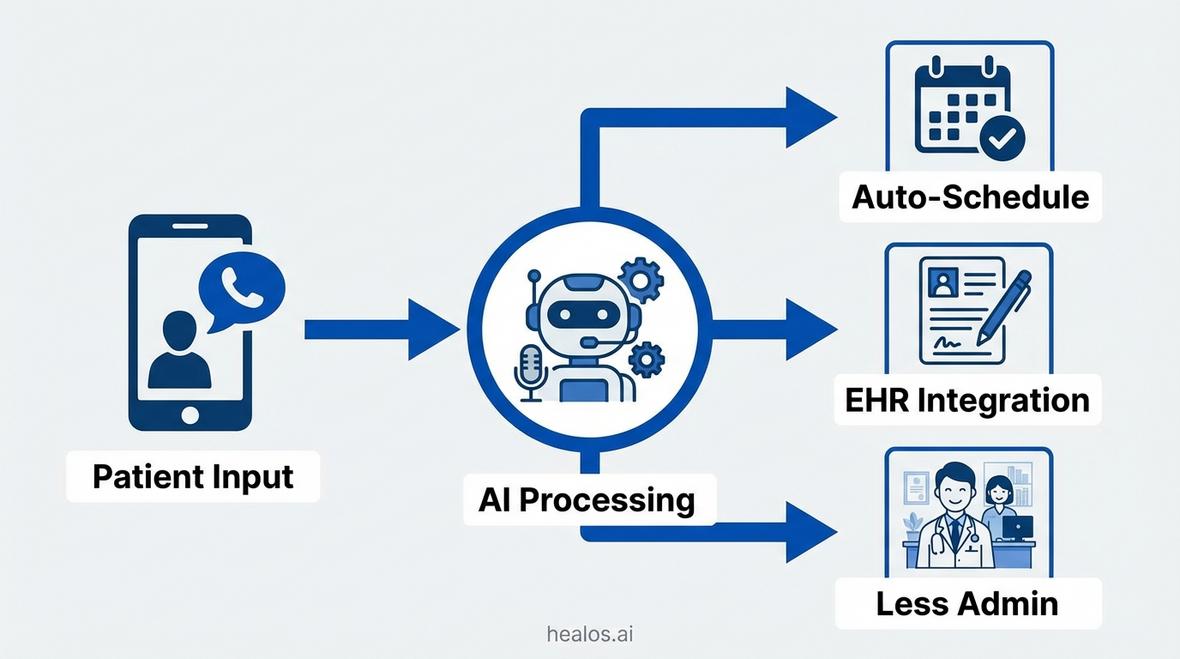
Today's AI receptionist healthcare platforms perform multiple critical functions simultaneously. They manage inbound patient calls 24/7, automatically schedule appointments based on provider availability and patient preferences, conduct pre-visit insurance eligibility checks, send automated appointment reminders, collect patient intake forms digitally, triage urgent requests to appropriate staff, and update EHR systems in real-time without manual data entry.
The technology stack typically includes conversational AI engines, voice-to-text transcription, sentiment analysis, HIPAA-compliant data storage, bi-directional EHR integration APIs, and predictive analytics dashboards. These components work together to create a seamless patient experience while dramatically reducing administrative workload for clinical staff.
How AI Receptionists Differ from Traditional Solutions
Traditional medical answering services rely on human operators who follow scripts and transfer calls, creating bottlenecks during peak hours and requiring extensive training. Virtual assistants operating from offshore locations introduce language barriers, HIPAA compliance risks, and quality inconsistencies. In contrast, AI receptionist healthcare systems scale infinitely without additional cost, maintain consistent quality across millions of interactions, eliminate hold times completely, and learn from every conversation to improve performance continuously.
The financial comparison is stark: human receptionists cost $35,000-$45,000 annually per full-time equivalent plus benefits, while AI receptionist solutions typically range from $200-$500 monthly for unlimited interactions. This represents a 90%+ cost reduction while simultaneously improving availability, accuracy, and patient satisfaction metrics.
Key Benefits for Overwhelmed Practice Managers
For practice managers battling staffing shortages and administrative overwhelm, AI receptionist healthcare technology delivers measurable improvements across operational, financial, and clinical dimensions. The unified agent approach addresses multiple pain points simultaneously rather than requiring separate point solutions for each workflow challenge.
Eliminating Staffing Bottlenecks Without Increasing Headcount
The American Medical Association reports that administrative tasks consume 16 hours per physician per week, with front desk operations representing a significant portion of this burden. By deploying AI receptionist healthcare systems, practices can absorb 30-50% more patient volume without hiring additional front desk staff. This is particularly valuable when facing receptionist turnover rates that exceed 20% annually in many markets.
AI receptionists handle routine inquiries, appointment scheduling, and basic triage automatically, freeing human staff to focus on complex cases requiring empathy, judgment, and relationship-building. This hybrid model maximizes both efficiency and patient satisfaction while protecting practices from the operational disruptions caused by unexpected resignations or illness among front desk personnel.
Reducing Claim Denials Through Proactive Verification
Insurance verification errors contribute to 30-40% of initial claim denials according to industry research, directly impacting practice financial health. AI receptionist healthcare platforms integrated with insurance automation systems verify patient eligibility in real-time before appointments, flag coverage issues proactively, collect accurate demographic and insurance information digitally, and identify authorization requirements automatically.
This proactive approach shifts verification from a reactive, post-appointment scramble to a preventive workflow that occurs during scheduling. Practices implementing comprehensive AI reception automation report 15-25% reductions in claim denial rates within the first quarter, translating directly to improved cash flow and reduced accounts receivable aging.
Alleviating Provider Burnout Through Administrative Relief
Provider burnout stems partly from excessive documentation and administrative interruptions that fragment clinical focus. While AI receptionist healthcare systems primarily address front desk workflows, their integration with AI scribe technology and document automation creates comprehensive administrative relief.
When AI handles appointment scheduling, intake forms, insurance verification, and pre-visit preparation automatically, providers arrive to encounters with complete, accurate information already entered into the EHR. Post-visit, automated follow-up calls, prescription refill coordination, and results notification reduce the administrative callbacks that interrupt clinical workflows. This holistic automation approach addresses the systemic administrative burden that drives physician dissatisfaction and attrition.
Critical Integration Capabilities for Healthcare Workflows
The value of AI receptionist healthcare technology depends almost entirely on seamless integration with existing practice management and EHR systems. Standalone solutions that require manual data transfer or operate in isolation from clinical workflows create additional administrative burden rather than reducing it.
Seamless EHR Integration Requirements
Best-in-class AI reception platforms offer bi-directional integration with major EHR systems including Epic, Cerner, Athenahealth, eClinicalWorks, and dozens of others. This integration enables the AI to read provider schedules in real-time, book appointments directly into the EHR calendar, update patient demographics automatically, attach intake forms to patient charts, flag insurance verification results, and trigger clinical workflows based on patient responses.
The 'unified agent' architecture pioneered by platforms like HealOS represents a significant advancement over point solutions. Rather than deploying separate AI tools for reception, scribing, billing, and documentation each requiring its own integration and creating data silos unified platforms share a common data layer across all AI agents. This eliminates redundant data entry, ensures consistency across workflows, and dramatically simplifies implementation and maintenance.
Multi-Channel Patient Communication
Modern patients expect communication flexibility across voice calls, SMS text messaging, email, patient portals, and web chat. AI receptionist healthcare systems must maintain conversation context across these channels seamlessly. A patient who starts scheduling via web chat should be able to continue the conversation via text message without repeating information.
Advanced platforms also support asynchronous communication, allowing patients to initiate conversations at their convenience and receive responses within seconds or minutes rather than waiting on hold during business hours. This asynchronous capability is particularly valuable for working patients who cannot easily make phone calls during traditional office hours.
Implementation Best Practices for Practice Managers
Successfully deploying AI receptionist healthcare technology requires careful planning, staff engagement, and phased rollout strategies that minimize disruption while maximizing adoption and effectiveness.
Assessment and Selection Phase
Begin by documenting current front desk workflows in detail, including call volume patterns, common patient inquiries, appointment scheduling rules, insurance verification processes, and intake procedures. Quantify the time spent on each task category and identify the highest-volume, most repetitive workflows as primary automation targets.
When evaluating AI receptionist healthcare vendors, prioritize platforms offering comprehensive EHR integration with your specific systems, HIPAA-compliant infrastructure with BAA agreements, customizable conversation flows matching your practice protocols, transparent pricing without per-interaction fees, and responsive implementation support. Request demonstrations using your actual workflows and patient scenarios rather than generic examples.
Phased Rollout Strategy
Rather than switching all front desk operations to AI simultaneously, implement a phased approach starting with after-hours coverage when AI can provide immediate value without requiring staff workflow changes. This allows the system to learn from real patient interactions while minimizing risk.
Next, expand to specific high-volume, low-complexity tasks such as appointment confirmations, basic scheduling for established patients, or prescription refill requests. Monitor performance metrics closely during each phase, gathering feedback from both patients and staff to refine conversation flows and escalation protocols before expanding scope further.
Staff Training and Change Management
Front desk staff may perceive AI receptionist healthcare technology as threatening their job security. Address this proactively by positioning AI as a tool that handles repetitive tasks, allowing staff to focus on complex patient needs requiring human judgment and empathy. Involve front desk team members in implementation planning, soliciting their expertise about common patient questions, edge cases, and workflow nuances.
Provide comprehensive training on how to monitor AI interactions, when to intervene in escalated conversations, and how to use analytics dashboards to identify improvement opportunities. Celebrate efficiency gains and patient satisfaction improvements as team achievements rather than AI replacing human contribution.
Measuring ROI and Performance Metrics
Quantifying the return on investment from AI receptionist healthcare implementation requires tracking both direct cost savings and indirect operational improvements across multiple dimensions.
Direct Cost Metrics
Calculate the fully-loaded cost of front desk staffing including salaries, benefits, recruitment, training, and management overhead. Compare this to the monthly or annual cost of your AI reception platform plus any implementation or customization fees. Most practices achieve positive ROI within 3-6 months even when maintaining existing staff levels due to increased patient volume capacity.
Additional direct savings come from reduced no-show rates through automated reminder systems, decreased claim denials from improved insurance verification, and lower phone system costs as call volume to human operators decreases. Track these metrics monthly to demonstrate ongoing value and justify expansion to additional AI-powered workflows like revenue cycle management automation.
Operational Efficiency Indicators
Monitor average call answer time (target: under 30 seconds), appointment scheduling completion rate, patient intake form completion before visit, insurance verification completion rate, and call abandonment rate. Best-in-class AI receptionist healthcare systems achieve 90%+ patient satisfaction scores, sub-10-second average answer times, and near-zero abandonment rates even during peak call periods.
Track staff time allocation shifts as AI handles routine tasks. Measure the percentage of staff time redirected from repetitive scheduling calls to higher-value activities like care coordination, complex problem resolution, or patient education. These qualitative improvements often deliver greater long-term value than direct cost savings alone.
Advanced Use Cases Beyond Basic Reception
While appointment scheduling and basic inquiry handling represent the foundation of AI receptionist healthcare technology, advanced implementations extend automation across the entire patient journey and practice operational workflows.
Intelligent Patient Intake and Triage
Comprehensive AI-powered intake systems conduct structured conversations that collect medical history, current symptoms, medication lists, and social determinants of health. Natural language processing identifies clinically significant details and flags urgent conditions requiring immediate attention or same-day scheduling.
This intelligent triage capability ensures appropriate appointment types and durations are scheduled, necessary pre-visit testing is ordered, and providers receive comprehensive background information before encounters. Practices report 30-40% reductions in appointment duration for straightforward cases when comprehensive intake is completed in advance.
Automated Follow-Up and Care Coordination
Post-visit workflows represent another high-value automation opportunity. AI receptionist healthcare platforms can automatically conduct follow-up calls to check on patient recovery, confirm medication adherence, schedule follow-up appointments, and identify complications requiring clinical attention.
For chronic disease management, AI systems conduct regular check-ins, collect patient-reported outcomes, provide education and encouragement, and alert clinical staff to concerning trends. This proactive outreach improves clinical outcomes while reducing emergency department utilization and hospital readmissions key quality metrics for value-based care contracts.
Streamlined Referral Management
Referral coordination involves complex workflows spanning multiple providers, insurance authorization requirements, and patient communication touchpoints. AI reception systems integrated with referral management platforms automate referral intake from ordering providers, verify insurance coverage for specialist services, schedule initial specialist appointments, transmit clinical documentation automatically, and follow up with patients to ensure appointment completion.
This end-to-end automation reduces referral leakage (patients who never complete specialist visits), improves referring provider satisfaction, and strengthens network relationships all while eliminating dozens of manual coordination steps previously handled by staff.
HIPAA Compliance and Security Considerations
Deploying AI receptionist healthcare technology requires rigorous attention to patient privacy, data security, and regulatory compliance. Any solution handling protected health information must meet or exceed HIPAA requirements across technology, policy, and operational dimensions.
HIPAA Technical Safeguards
Ensure your AI reception platform provides end-to-end encryption for all data in transit and at rest, role-based access controls limiting data access to authorized personnel, comprehensive audit logging of all system interactions, regular security testing and vulnerability assessments, and disaster recovery and business continuity capabilities. Vendors should provide detailed security documentation and willingly execute Business Associate Agreements accepting HIPAA liability.
Voice interactions present particular security challenges. Verify that recorded conversations are encrypted immediately, stored securely with access controls, retained according to your record retention policies, and can be purged completely upon patient request. Avoid platforms that route voice data through unsecured third-party services or store recordings in non-compliant cloud infrastructure.
Patient Consent and Transparency
Implement clear patient communication about AI usage in your practice. This includes notifying patients when they're interacting with AI rather than humans, explaining how their data will be used and protected, offering options to speak with human staff if preferred, and obtaining consent for AI interactions as appropriate. Transparency builds trust and reduces patient concerns about automated systems in healthcare settings.
Future Trends in AI Reception Technology
The AI receptionist healthcare landscape continues evolving rapidly with emerging capabilities that will further transform practice operations over the next 2-3 years.
Predictive Scheduling and Demand Forecasting
Next-generation AI systems will analyze historical appointment patterns, seasonal trends, local health events, and population health data to predict demand and optimize provider scheduling proactively. This capability will reduce both provider idle time and patient wait times by ensuring capacity aligns with predicted need.
Multimodal AI Understanding
Emerging AI models combine voice, text, and visual inputs to provide richer patient interactions. Future AI receptionist healthcare systems may analyze patient-submitted photos for triage purposes, interpret insurance cards automatically via mobile upload, or conduct video-based symptom assessments, all while maintaining natural conversation flow.
Expanded Unified Agent Platforms
The trend toward unified platforms like HealOS AI agents will accelerate as practices recognize the operational complexity and integration challenges of managing multiple point solutions. Expect increasing consolidation of reception, scribing, billing, coding, and care coordination into single-platform offerings with shared intelligence and seamless data flow.
Frequently Asked Questions
How much does AI receptionist healthcare technology cost?
AI reception platforms typically range from $200-$500 monthly for small practices with basic features, scaling to $1,000-$3,000 monthly for larger practices or those requiring advanced capabilities like complex scheduling rules, multi-location support, or extensive customization. This represents 90%+ savings compared to full-time receptionist salaries while providing 24/7 availability.
How long does implementation take?
Basic AI reception setup for simple scheduling and inquiry handling can be completed in 1-2 weeks. Comprehensive implementations with full EHR integration, custom conversation flows, insurance verification, and intake automation typically require 4-8 weeks including configuration, testing, staff training, and phased rollout.
Do patients accept AI receptionists?
Patient acceptance is high when AI systems are well-designed and clearly positioned. Research indicates 70%+ of patients prefer immediate AI response over waiting on hold for human staff, particularly for routine tasks like appointment scheduling or prescription refills. Key success factors include natural conversation quality, easy escalation to humans when needed, and transparency about AI usage.
Will AI replace our front desk staff?
AI reception technology is best positioned as augmentation rather than replacement. Most practices maintain existing staff while redirecting their efforts from repetitive tasks to higher-value activities requiring empathy, judgment, and complex problem-solving. This hybrid model improves both efficiency and patient satisfaction while addressing staff burnout from routine task overload.
What EHR systems integrate with AI receptionists?
Leading AI receptionist healthcare platforms offer integration with major EHR systems including Epic, Cerner, Athenahealth, eClinicalWorks, Nextgen, Kareo, DrChrono, and many others. Platforms like HealOS provide extensive integration options covering both large enterprise systems and specialty-specific platforms. Always verify specific integration availability for your EHR before selection.
Conclusion
For overwhelmed practice managers facing staffing shortages, administrative burden, and financial pressures from claim denials, AI receptionist healthcare technology offers a proven path to operational efficiency and scalability without increasing headcount. The transition from human-dependent front desk operations to AI-augmented workflows delivers measurable cost savings, improved patient access, reduced administrative burden on providers, and enhanced revenue cycle performance through proactive insurance verification.
Success requires selecting platforms with robust EHR integration, implementing thoughtfully with staff engagement, and measuring performance rigorously. Unified agent approaches like those offered by HealOS simplify implementation while enabling expansion to comprehensive practice automation across reception, documentation, billing, and care coordination. As AI capabilities continue advancing, early adopters position their practices for sustained competitive advantage in an increasingly challenging healthcare environment.