
EHR Integration AI: Complete 2026 Guide To Automating Practice Workflows And Reducing Provider Burnout

Understanding EHR Integration AI in 2026
Electronic Health Record (EHR) integration AI represents a transformative leap in healthcare technology, enabling practice managers to automate previously manual workflows while maintaining seamless connectivity with existing systems. For overwhelmed practice managers facing staffing shortages and escalating operational costs, EHR integration AI offers a unified solution that addresses both efficiency and financial sustainability.
At its core, EHR integration AI connects intelligent automation agents directly to your practice's existing EHR platform whether that's Epic, Cerner, Athenahealth, or dozens of other systems. This integration eliminates the need for duplicate data entry, reduces human error, and allows clinical and administrative staff to focus on patient care rather than paperwork. According to research from HealthIT.gov, 93% of hospitals use AI for predicting inpatient health risks, demonstrating widespread adoption of AI-enhanced EHR systems to improve clinical outcomes and operational efficiency.
The significance of EHR integration AI extends beyond simple automation. It creates a cohesive ecosystem where patient data flows intelligently between scheduling, billing, documentation, and clinical decision support systems. This unified approach is precisely what practice managers need to scale operations without proportionally increasing headcount a critical advantage in today's competitive healthcare landscape.
Why Practice Managers Need EHR Integration AI Now
Practice managers today face an unprecedented convergence of challenges: chronic staffing shortages, provider burnout from excessive charting, increasing claim denial rates, and escalating operational costs. Traditional solutions like hiring additional staff or implementing standalone software tools create fragmented workflows that ultimately compound the problem rather than solving it.
EHR integration AI addresses these pain points through a unified agent approach that consolidates multiple administrative functions into a single, intelligent system. Instead of managing separate vendors for medical scribing, receptionist duties, billing follow-up, and prior authorization, practice managers can deploy integrated AI agents that communicate seamlessly through the EHR.
Research published in Frontiers in Public Health demonstrates that AI integration reduces EHR-related burnout via documentation efficiency, with systematic reviews showing that AI technologies like ambient scribes and natural language processing improve documentation efficiency, reduce after-hours workload, and alleviate burnout for healthcare professionals.
Financial health represents another critical driver. Claim denials cost practices thousands of dollars monthly in lost revenue and administrative overhead. EHR integration AI can automatically scrub claims for errors before submission, verify insurance eligibility in real-time, and flag potential denials based on historical patterns all without human intervention. For practice managers focused on the bottom line, this translates directly to improved cash flow and reduced accounts receivable aging.
Core Components of EHR Integration AI Systems
Effective EHR integration AI platforms consist of several interconnected components that work together to automate clinical and administrative workflows. Understanding these elements helps practice managers evaluate solutions and implement them strategically within their organizations.
Intelligent Documentation Agents
Documentation remains one of the most time-consuming aspects of modern healthcare. Physicians spend an average of two hours on EHR documentation for every hour of direct patient care. AI scribe technology integrated directly with your EHR captures patient encounters in real-time, generates structured clinical notes, and populates the appropriate fields automatically.
These systems use ambient listening technology and natural language processing to understand clinical conversations, extract relevant medical information, and format it according to specialty-specific templates. The result is comprehensive, accurate documentation completed during or immediately after the patient visit eliminating pajama time and reducing provider burnout significantly.
Automated Administrative Workflows
Beyond clinical documentation, EHR integration AI excels at streamlining repetitive administrative tasks. AI receptionist systems can handle appointment scheduling, patient intake, insurance verification, and follow-up calls all synchronized with your EHR in real-time. This eliminates double-booking, ensures accurate demographic information, and reduces no-show rates through automated reminder systems.
For practice managers struggling with front-desk staffing, these AI agents provide 24/7 availability without overtime costs or scheduling conflicts. Patients can book appointments, update information, and receive answers to common questions outside normal business hours, improving satisfaction while reducing administrative burden on your team.
Revenue Cycle Management Integration
Financial operations represent another critical integration point. AI-powered revenue cycle management agents can verify insurance eligibility before appointments, submit clean claims immediately after encounters, follow up on unpaid claims automatically, and even handle denial management with minimal human oversight.
According to research published in PMC, EHR AI integration benefits clinical decision support and usability, though challenges like alert fatigue require careful implementation. For billing specifically, integration ensures that coding is accurate based on documentation, reducing denials and accelerating reimbursement cycles.
Implementation Strategy for Practice Managers
Successfully deploying EHR integration AI requires a strategic approach that addresses technical, operational, and cultural considerations. Practice managers who follow a structured implementation roadmap achieve faster time-to-value and higher staff adoption rates.
Assess Current Workflows and Pain Points
Begin by documenting your practice's existing workflows and identifying the most significant bottlenecks. Which administrative tasks consume the most staff time? Where do errors most frequently occur? What aspects of the workflow cause the most provider frustration? This assessment creates a prioritized roadmap for AI implementation, ensuring you address high-impact areas first.
For most practices, documentation and phone management represent the largest time sinks. Starting with AI medical scribe integration and medical answering services typically delivers the fastest ROI and builds organizational confidence in the technology.
Select a Unified Platform Approach
While it may be tempting to implement best-of-breed point solutions for each function, this approach recreates the fragmentation problem you're trying to solve. Instead, prioritize platforms that offer comprehensive EHR integrations across multiple functional areas. A unified agent approach ensures consistent data flow, eliminates redundant interfaces, and simplifies vendor management.
Platforms like HealOS provide integrated solutions spanning clinical documentation, patient communication, billing automation, and administrative workflows all connected through a single EHR integration. This architecture reduces implementation complexity and ongoing maintenance while delivering superior interoperability.
Pilot, Test, and Scale Methodology
Rather than deploying AI across your entire practice simultaneously, implement a phased rollout beginning with a small pilot group. Select one or two providers who are technologically comfortable and willing to provide candid feedback. Monitor performance metrics closely: documentation time, claim denial rates, patient satisfaction scores, and staff feedback.
Once the pilot demonstrates clear value, expand gradually to additional providers and departments. This controlled approach allows you to refine workflows, address technical issues, and build organizational buy-in before full-scale deployment. Most practices achieve complete rollout within 60-90 days using this methodology.
Addressing Common Implementation Challenges
Even well-planned implementations encounter obstacles. Understanding common challenges and their solutions helps practice managers navigate the transition smoothly and maintain stakeholder confidence.
Provider Resistance to Workflow Changes
Physicians and clinical staff often resist new technologies, particularly when they've been burned by poorly implemented EHR systems in the past. Combat this resistance through early involvement, transparent communication, and demonstrable time savings. Show providers concrete examples of how AI will reduce their documentation burden rather than adding to it.
Offering speciality-specific customization also increases adoption. A psychiatry practice has different documentation needs than a cardiology practice. AI systems that adapt to these nuances gain faster acceptance than one-size-fits-all solutions.
Data Security and Compliance Concerns
HIPAA compliance and data security represent non-negotiable requirements for any healthcare technology. When evaluating EHR integration AI platforms, verify that they maintain current BAAs (Business Associate Agreements), employ encryption for data in transit and at rest, and undergo regular security audits.
Reputable platforms provide detailed security documentation and compliance certifications. They should also offer granular access controls, audit logging, and data residency options to meet your organization's specific requirements. Don't compromise on security to achieve faster implementation the regulatory and reputational risks far outweigh any short-term gains.
Integration Technical Limitations
Not all EHR systems offer the same level of API access or integration flexibility. Older legacy systems may require custom development work or alternative integration approaches like HL7 interfaces or screen scraping. Work closely with your EHR vendor and AI platform provider to identify the optimal integration method for your specific environment.
In some cases, partial integration delivers sufficient value while full bidirectional sync is developed over time. For example, you might initially integrate AI-generated notes through copy-paste workflows while working toward direct EHR field population in subsequent phases.
Measuring ROI and Success Metrics
Practice managers need concrete data to justify technology investments and demonstrate value to stakeholders. Establishing clear success metrics before implementation enables objective evaluation and continuous improvement.
Time Savings and Productivity Gains
Track documentation time before and after AI implementation. How many minutes does the average encounter require for note completion? How much after-hours charting occurs weekly? Reduction in these metrics directly translates to provider capacity either seeing more patients or achieving better work-life balance.
Similarly, measure administrative task completion rates and time. How quickly are phone calls answered? What percentage of insurance verifications are completed before appointments? How long does claim submission take after encounters? AI should demonstrate measurable improvements across all these dimensions.
Financial Performance Indicators
Revenue cycle metrics provide the clearest financial ROI indicators. Monitor claim denial rates, days in accounts receivable, collection percentages, and write-offs. Effective denial management automation should reduce denials by 30-50% within the first six months while accelerating payment collection.
Also track cost avoidance from reduced staffing needs. If AI eliminates the need for one full-time scribe or receptionist, that represents $40,000-$60,000 in annual savings plus benefits and overhead. These hard-dollar savings typically justify AI investments within the first year.
Quality and Patient Satisfaction Metrics
Beyond efficiency and financials, assess clinical quality and patient experience indicators. Are providers maintaining eye contact during visits rather than typing? Are patients reporting higher satisfaction with appointment scheduling and communication? Is clinical documentation more complete and accurate?
These qualitative improvements may not appear immediately on financial statements but contribute significantly to long-term practice sustainability, provider retention, and competitive positioning in your market.
Future Trends in EHR Integration AI
The EHR integration AI landscape continues evolving rapidly. Practice managers who understand emerging trends can make more strategic technology investments that remain relevant as capabilities advance.
Predictive Analytics and Proactive Care
Next-generation AI systems are moving beyond reactive automation toward predictive capabilities. By analyzing historical patient data, these systems can identify individuals at high risk for hospital readmission, medication non-compliance, or disease progression. This enables proactive outreach and intervention before costly complications develop.
According to research on large-scale EHR data aggregation, integration of AI with EHRs enables large-scale data aggregation from records and wearables, supporting predictive healthcare while highlighting important data security considerations that must be addressed.
Multimodal AI for Comprehensive Automation
Current AI systems typically focus on single modalities text, voice, or images. Emerging platforms combine multiple input types simultaneously, understanding spoken conversations, visual cues from video consultations, and structured EHR data together. This multimodal approach enables more sophisticated automation across complex clinical scenarios.
Autonomous Agents Requiring Minimal Oversight
Today's AI systems typically operate with human review and approval before finalizing actions. Future autonomous agents will handle routine tasks completely independently, escalating only exceptions or unusual cases to human staff. This shift from 'human-in-the-loop' to 'human-on-the-loop' will dramatically amplify productivity gains and reduce administrative overhead further.
Selecting the Right EHR Integration AI Partner
The vendor you choose significantly impacts implementation success and long-term value realization. Practice managers should evaluate potential partners across multiple dimensions beyond feature lists and pricing.
Platform Breadth and Integration Depth
Comprehensive platforms offering document automation, prior authorization, and referral management in addition to core scribing and receptionist functions deliver greater value than point solutions. Evaluate whether the platform can grow with your needs rather than requiring replacement as requirements evolve.
Implementation Support and Training
Technology alone doesn't guarantee success implementation methodology and ongoing support matter equally. Assess the vendor's training resources, implementation timelines, and post-go-live support model. Do they provide dedicated implementation specialists? What does their training program include? How quickly do they respond to technical issues?
Customization and Specialty Optimization
Generic AI trained on broad datasets may not understand the nuances of your specific specialty. Platforms offering specialty-specific optimization for pediatrics, oncology, or orthopedics deliver higher accuracy and require less manual correction. Verify that the vendor has experience in your practice type and can demonstrate relevant clinical knowledge.
Frequently Asked Questions
How long does EHR integration AI implementation take?
Most practices complete initial implementation within 2-4 weeks for core functions like AI scribing and receptionist automation. Full integration across all administrative workflows typically requires 60-90 days depending on EHR complexity and organizational readiness. Phased rollouts allow partial value realization while complete deployment continues.
What EHR systems are compatible with AI integration?
Leading AI platforms support major EHR systems including Epic, Cerner, Athenahealth, eClinicalWorks, NextGen, and dozens of others. Some platforms offer direct API integrations while others use HL7 interfaces or alternative connection methods. Verify specific compatibility with your EHR version before committing to a platform.
Does EHR integration AI require dedicated technical staff?
No. Modern cloud-based AI platforms handle technical infrastructure, updates, and maintenance centrally. Your practice needs only standard computer equipment and internet connectivity. Most implementations require minimal IT involvement beyond initial credential exchange and network configuration.
Can AI handle specialty-specific documentation requirements?
Yes. Advanced AI platforms offer specialty-specific templates, terminology, and workflow optimization for psychiatry, cardiology, pediatrics, and other specialties. These systems learn from specialty-specific training data and can be further customized to match your practice's documentation preferences and requirements.
What happens if the AI makes a documentation error?
All AI-generated documentation should undergo provider review before finalization the AI serves as an intelligent first draft rather than a replacement for clinical judgment. Providers maintain ultimate responsibility for note accuracy and can edit any AI-generated content. Over time, the AI learns from corrections and improves accuracy progressively.
How much does EHR integration AI typically cost?
Pricing varies by platform and features but generally ranges from $99-$399 per provider monthly for comprehensive solutions including scribing, receptionist automation, and billing support. This represents significant savings compared to hiring human scribes ($40,000+ annually) or additional administrative staff. Most practices achieve positive ROI within 3-6 months.
Conclusion
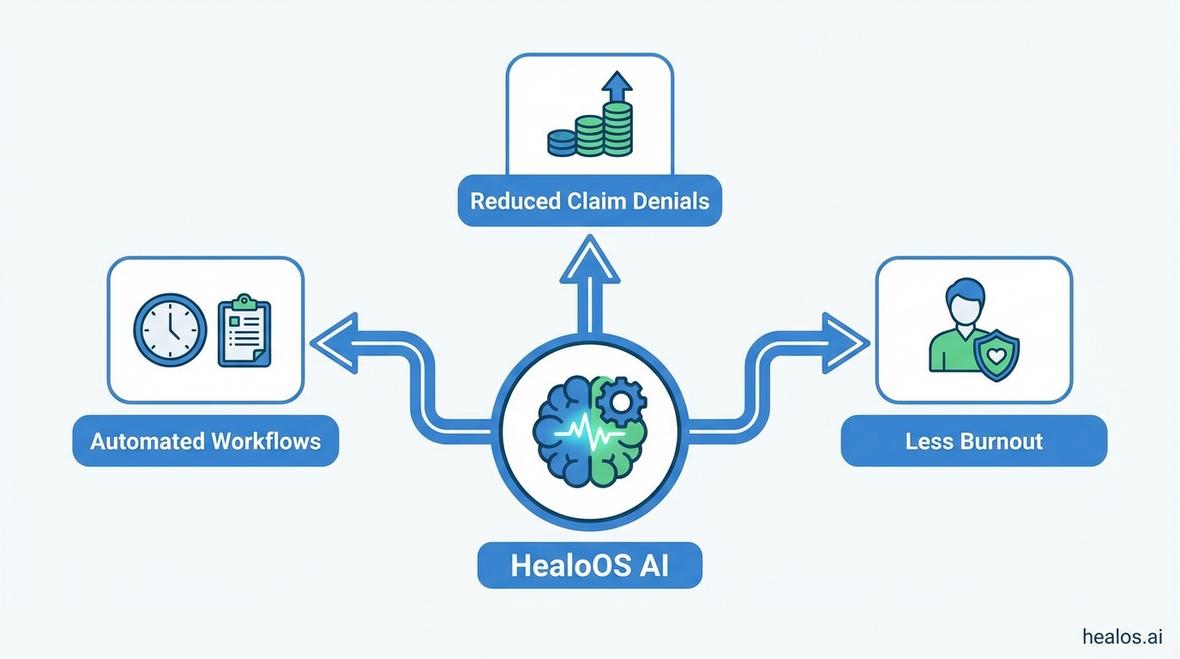
EHR integration AI represents a fundamental shift in how healthcare practices operate, offering overwhelmed practice managers a realistic path to scale operations without proportionally increasing headcount. By seamlessly connecting intelligent automation agents to existing EHR systems, practices can simultaneously reduce claim denials, alleviate provider burnout from excessive charting, and improve financial health through operational efficiency. The technology has matured beyond experimental status with 93% of hospitals already leveraging AI for clinical workflows, adoption is accelerating rapidly. Practice managers who implement comprehensive, unified AI platforms today position their organizations for sustainable growth while their competitors struggle with traditional staffing models. The question is no longer whether to adopt EHR integration AI, but how quickly you can implement it to capture competitive advantage in an increasingly automated healthcare landscape.