
Sunoh AI Medical Scribe: Complete Guide To Alternatives, Pricing & Best Solutions For Practice Automation

Understanding Sunoh AI Medical Scribe
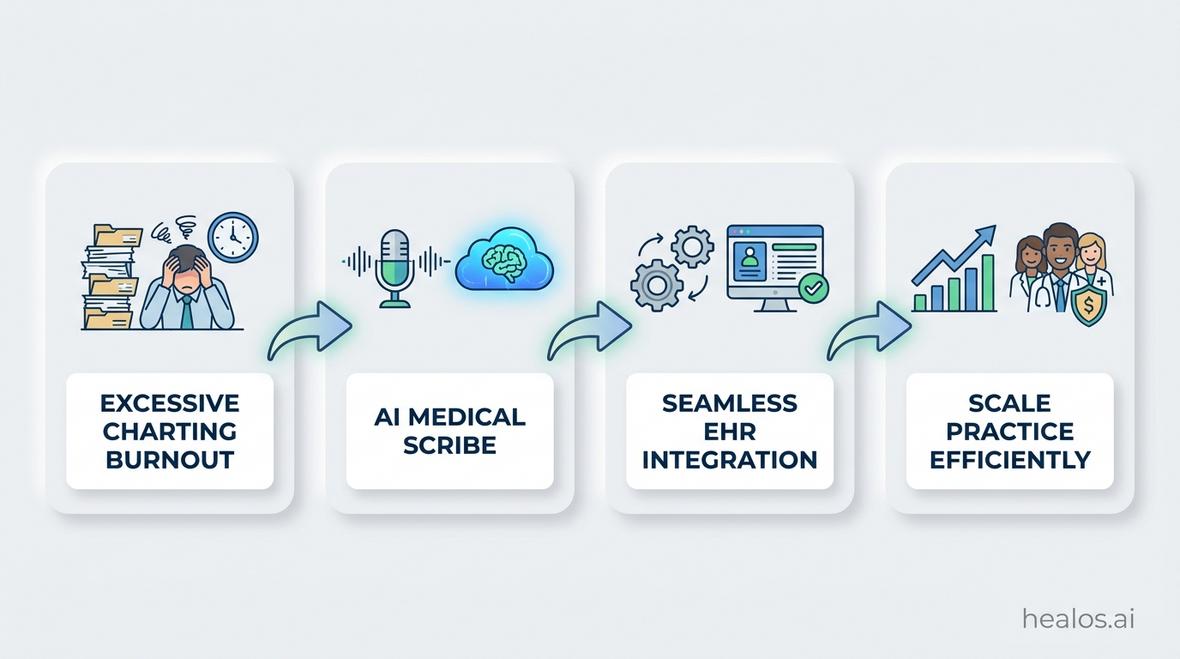
The sunoh ai medical scribe has emerged as one of many ambient listening AI documentation tools designed to reduce physician charting burden. For overwhelmed practice managers facing staffing shortages and escalating provider burnout, understanding how Sunoh AI compares to other solutions and whether it truly delivers on promises of seamless EHR integration and workflow automation is critical to making informed purchasing decisions.
Sunoh AI markets itself as an ambient AI scribe that captures patient-provider conversations and auto-generates clinical notes. However, research shows that physicians spend nearly two hours on EHR and desk work for every one hour of direct patient care, making the selection of the right documentation tool a strategic decision that impacts both financial health and operational efficiency.
This comprehensive guide examines Sunoh AI's capabilities, pricing structure, and competitive positioning while highlighting why many practice managers are turning to unified automation platforms like HealOS AI Scribe that integrate documentation with revenue cycle management, patient communication, and claims processing.
Sunoh AI Features and Capabilities
The sunoh ai medical scribe offers ambient clinical intelligence designed to streamline documentation workflows. Key features include:
- Ambient Listening Technology: Captures natural patient-provider conversations without requiring structured dictation
- Automated Note Generation: Produces draft clinical notes in multiple formats including SOAP, HPI, and specialty-specific templates
- EHR Integration: Claims compatibility with major electronic health record systems, though depth of integration varies
- Mobile and Desktop Access: Supports documentation across devices and care settings including telehealth
While these features address basic documentation needs, practice managers must evaluate whether Sunoh AI provides the comprehensive automation required to truly scale operations without increasing headcount. Studies demonstrate a strong association between time spent on EHR and clerical tasks outside office hours and higher burnout scores among physicians, suggesting that partial automation may not adequately address the root causes of provider fatigue.
Ambient Listening vs. Structured Dictation
Unlike traditional medical dictation software that requires physicians to speak in specific formats, the sunoh ai medical scribe uses ambient listening technology to capture free-flowing conversations. This approach reduces cognitive load during patient encounters but introduces quality control challenges AI must distinguish relevant clinical information from conversational filler, patient questions, and background noise.
The accuracy of ambient systems depends heavily on training data, acoustic quality, and specialty-specific terminology. For practice managers evaluating ROI, understanding how documentation accuracy affects downstream processes including coding precision, claim denial rates, and compliance risk is essential.
Sunoh AI Pricing Structure
Pricing transparency remains a challenge across the AI scribe market, and Sunoh AI is no exception. Based on market analysis and user reports, Sunoh AI typically operates on a per-provider, per-month subscription model with pricing tiers based on:
- Number of Providers: Volume discounts may apply for larger practices
- Monthly Encounter Volume: Some plans cap the number of notes generated per month
- Feature Access: Advanced capabilities like custom templates or specialized EHR integrations may require premium tiers
- Support and Training: Implementation assistance and ongoing technical support affect total cost
For a detailed breakdown of Sunoh AI's pricing compared to alternatives, see our comprehensive Sunoh AI pricing analysis. Practice managers must calculate total cost of ownership including hidden fees, training time, and productivity during implementation.
Cost Comparison with Alternatives
When evaluating the sunoh ai medical scribe against competitors, consider both direct subscription costs and indirect efficiency gains. A comprehensive cost analysis shows that AI scribes can save practices up to $14,000 per provider annually compared to human scribes but only if the technology delivers consistent accuracy and integrates seamlessly with existing workflows.
Key cost factors to evaluate:
| Cost Category | Sunoh AI | HealOS AI | Impact on Practice |
|---|---|---|---|
| Base Subscription | Varies by tier | Transparent pricing | Predictable budgeting |
| Implementation | Custom quoted | Included | Time to value |
| Training Required | Moderate | Minimal | Staff productivity |
| Integration Fees | May apply | Included | True TCO |
EHR Integration Depth and Workflow Impact
For the overwhelmed practice manager, seamless EHR integration is not a luxury it's a necessity. The true value of any AI scribe, including the sunoh ai medical scribe, depends on how frictionlessly it fits into existing clinical workflows.
Critical integration questions include:
- Does the scribe auto-populate discrete EHR fields (diagnosis codes, medications, vitals) or only generate narrative text?
- How many clicks are required to move AI-generated content into the patient chart?
- Does the system support bi-directional data flow, pulling patient history to inform documentation?
- Can templates be customized to match specialty-specific documentation requirements and payer guidelines?
The HealOS platform addresses these challenges through deep, bidirectional integrations with major EHR systems, ensuring that documentation flows seamlessly into structured fields required for coding, billing, and quality reporting. This unified approach reduces the administrative burden that research has linked to decreased clinic efficiency and increased provider burnout.
The Unified Agent Advantage
Unlike standalone scribes like Sunoh AI, unified automation platforms combine medical scribe capabilities with revenue cycle management, patient communication, and claims processing. This 'unified agent' approach delivers:
- Reduced Claim Denials: Documentation automatically optimized for medical necessity and coding accuracy
- Automated Prior Authorizations: Clinical notes trigger prior authorization workflows without manual intervention
- Streamlined Referrals: Integrated referral management ensures continuity of care documentation
- Patient Follow-Up:AI receptionist capabilities automate appointment reminders and post-visit instructions
This holistic approach addresses the core goal of overwhelmed practice managers: scaling the practice without increasing headcount, while simultaneously improving financial health through reduced denials and faster reimbursement cycles.
Accuracy and Clinical Quality Considerations
Documentation accuracy is paramount not only for patient safety but also for compliance, reimbursement, and legal protection. When evaluating the sunoh ai medical scribe, practice managers must assess:
- Specialty-Specific Terminology: Does the AI accurately capture complex clinical language in cardiology, oncology, psychiatry, or other specialties?
- Error Rates and Review Time: How much physician time is required to review and correct AI-generated notes?
- Compliance with Documentation Standards: Do notes meet regulatory requirements for medical necessity, E/M coding, and audit defense?
- Learning Curve: Does the system improve accuracy over time by learning individual provider preferences?
Leading platforms like HealOS AI achieve accuracy rates exceeding 98% through continuous learning algorithms and specialty-specific training datasets. For practice managers focused on reducing claim denials, this precision directly impacts revenue cycle performance.
Documentation Burden and Provider Satisfaction
The ultimate measure of any scribe solution is whether it reduces provider burnout and improves job satisfaction. Key metrics include:
- Time Savings: Hours saved per provider per week on documentation
- After-Hours Charting: Reduction in 'pajama time' spent completing notes outside clinic hours
- Patient Face Time: Ability to focus on the patient rather than the computer screen
- Cognitive Load: Mental energy freed from documentation tasks
Comprehensive guides like our AI medical scribe implementation playbook help practice managers measure these qualitative benefits alongside quantitative ROI.
Sunoh AI vs. HealOS: Comprehensive Comparison
For practice managers evaluating the sunoh ai medical scribe against alternatives, a direct comparison with HealOS reveals significant differences in scope, integration depth, and total value:
| Feature | Sunoh AI | HealOS |
|---|---|---|
| AI Scribe | Yes | Yes |
| Ambient Listening | Yes | Yes |
| Custom Templates | Limited | Unlimited |
| Revenue Cycle Management | No | Yes |
| Prior Authorization Automation | No | Yes |
| Denial Management | No | Yes |
| AI Receptionist | No | Yes |
| Referral Management | No | Yes |
| Eligibility Verification | No | Yes |
| Claims Processing | No | Yes |
This comparison highlights why many practice managers choose unified platforms: they address the full spectrum of administrative automation needed to scale operations efficiently. For a detailed side-by-side analysis, see our HealOS vs Sunoh AI comparison guide.
Implementation and Training Requirements
The success of any AI scribe deployment depends on effective implementation and user adoption. Critical considerations include:
- Onboarding Timeline: How long before providers achieve full productivity?
- Technical Support: Availability of real-time assistance during the learning curve
- Template Customization: Ease of adapting the system to specialty and provider preferences
- Staff Training: Resources required to train clinical and administrative staff
Practice managers implementing the sunoh ai medical scribe should budget for initial productivity dips as providers learn new workflows. Platforms with comprehensive training resources and academies can accelerate time-to-value and reduce implementation friction.
Alternative Solutions for Practice Automation
While Sunoh AI addresses documentation, overwhelmed practice managers seeking comprehensive automation should evaluate platforms that integrate multiple workflows:
HealOS Unified Automation Platform
HealOS combines AI medical scribe, revenue cycle management, insurance automation, and document automation into a single unified agent. This approach delivers:
- Reduced Administrative Headcount: Automate tasks across the entire practice workflow
- Improved Cash Flow: Faster claims processing and reduced denials through integrated documentation and coding
- Scalable Growth: Add providers and patient volume without proportional staff increases
- Enhanced Provider Satisfaction: Comprehensive reduction in clerical burden across all touchpoints
Specialty-Specific Considerations
Different specialties have unique documentation requirements. HealOS offers tailored solutions for:
- Psychiatry: Mental status exams, therapy notes, medication management
- Cardiology: Procedure notes, stress test documentation, device monitoring
- Oncology: Treatment plans, clinical trial documentation, survivorship care
- Pediatrics: Growth charts, immunization records, well-child visits
- Orthopedics: Surgical notes, range of motion assessments, imaging documentation
These specialty-optimized solutions ensure that AI-generated documentation meets both clinical standards and payer-specific requirements for each field.
Security, Compliance, and HIPAA Considerations
Any AI scribe solution, including the sunoh ai medical scribe, must meet rigorous security and compliance standards:
- HIPAA Compliance: Encryption, access controls, and business associate agreements
- Data Residency: Where patient data is stored and processed
- Audit Trails: Comprehensive logging of all access and modifications
- Disaster Recovery: Backup and continuity plans to prevent data loss
Practice managers bear ultimate responsibility for HIPAA compliance. Selecting vendors with robust security frameworks, transparent privacy policies, and proven compliance track records is essential. Our HIPAA compliance guide for AI medical scribes provides a detailed checklist for vendor evaluation.
Measuring ROI for Practice Managers
For the overwhelmed practice manager, justifying technology investments requires demonstrable return on investment across multiple dimensions:
Financial ROI
- Reduced Scribe Costs: Savings from eliminating or reducing human scribe staff
- Increased Provider Productivity: Additional patients seen per day due to reduced documentation time
- Decreased Claim Denials: Revenue captured through improved documentation quality and coding accuracy
- Faster Reimbursement: Accelerated cash flow from streamlined billing processes
Operational ROI
- Staff Retention: Reduced turnover from decreased burnout
- Scalability: Ability to grow patient volume without proportional administrative growth
- Compliance Risk Reduction: Decreased audit and malpractice exposure from improved documentation
- Patient Satisfaction: Enhanced experience from more attentive, present providers
Comprehensive ROI calculators and case studies, such as those available through HealOS implementation resources, help practice managers build business cases for automation investments.
Frequently Asked Questions
How does Sunoh AI compare to other medical scribes?
The sunoh ai medical scribe offers ambient documentation capabilities similar to competitors like DeepScribe, Freed AI, and Suki. However, it operates as a standalone documentation tool rather than a unified automation platform. Practice managers seeking comprehensive workflow automation that includes revenue cycle management, insurance verification, and patient communication should evaluate integrated solutions like HealOS.
What is the typical ROI timeline for AI scribes?
Most practices achieve positive ROI within 3-6 months of implementing AI scribe technology, driven primarily by reduced human scribe costs and increased provider productivity. However, the full financial impact including reduced claim denials and improved cash flow may take 6-12 months to materialize as documentation quality improvements flow through the revenue cycle.
Can Sunoh AI integrate with my existing EHR?
Sunoh AI claims compatibility with major EHR systems, but integration depth varies. Practice managers should request detailed technical specifications and pilot testing to ensure the integration meets workflow requirements. Critical questions include whether the system supports bidirectional data flow, discrete field population, and custom template mapping to your EHR's documentation structure.
How accurate are AI-generated clinical notes?
Leading AI scribe platforms achieve accuracy rates of 95-98% for routine encounters, but accuracy depends on audio quality, specialty complexity, and provider speech patterns. All AI-generated notes require physician review and attestation. Practice managers should evaluate accuracy through controlled pilots and establish quality assurance processes to monitor ongoing performance.
What training is required for staff and providers?
Most AI scribe platforms, including Sunoh AI, require 2-4 hours of initial training for providers and 1-2 hours for administrative staff. Full proficiency typically develops over 2-4 weeks of regular use. Platforms with comprehensive training resources and responsive technical support can significantly reduce the learning curve and accelerate time to value.
Conclusion
The sunoh ai medical scribe represents one option in a rapidly evolving market of ambient clinical intelligence tools designed to reduce documentation burden. For overwhelmed practice managers facing staffing shortages and provider burnout, the critical question is not whether to adopt AI scribe technology but which solution delivers the most comprehensive automation and seamless integration with existing workflows.
While Sunoh AI addresses documentation, unified platforms like HealOS extend automation across the entire practice ecosystem from patient intake through revenue cycle management. By evaluating solutions based on EHR integration depth, accuracy, specialty fit, and total cost of ownership, practice managers can make strategic investments that truly scale operations without increasing headcount while improving both financial health and provider satisfaction.